
What Type of Job Interviews are Best?
Posted on 24 Feb, 2026
Interviews have been a big part of hiring for a long time. In theory, they give both the company and the candidate a chance to see if they are a good fit, have the right skills, and have the potential to do the job. But in real life, people have very different ideas about interviews. Some people think they are an important part of their jobs, while others think they are stressful, out of date, or even biased.
As virtual platforms and AI-led interviews become more common, people's ideas are changing quickly. Let's find out what people truly think about the three main types of interviews: in-person, virtual and AI. Let's also talk about why it's more vital than ever to create precise briefs.
The Traditional Benchmark: In-Person Interviews
For a lot of people, in-person interviews are still the best way to go. They give:
-
Direct contact with people
-
The skill of reading body language
-
A sense of company culture by the way things look
-
A more natural flow of discourse
-
A chance to get a feel for the workplace
What individuals enjoy
Candidates typically report that in-person interviews feel more real and genuine. It's comforting to shake hands, look someone in the eye, and get to know them in person. Hiring managers often think they can better judge someone's ability to get along with others and fit in with the company culture in person.
What people don't like
But talking to someone in person might be stressful. Travel time, planning, and the stress of being there in person can all make anxiety worse. Some people who apply for jobs also feel like they are being judged on things that have nothing to do with their skills, such their looks, accent, how articulate they are or anxious habits.
People are also becoming more aware that in-person forms may unintentionally put some groups at a disadvantage, especially those with impairments or not enough money to travel.
Virtual Interviews: Easy and Far Away
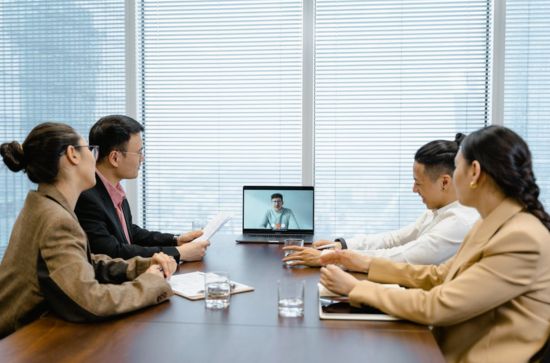
During the pandemic, virtual interviews became very popular and are still utilised a lot. Platforms like Teams, Google Meet and Zoom have made hiring people from afar normal.
What individuals enjoy
What is the best thing about it?
-
Convenience
-
No commute
-
More freedom to plan ahead
-
Lower costs
Access to a greater range of skilled workers
Candidates frequently feel more at ease when they interview from their own home. Employers like being able to quickly narrow down their choices and assess candidates, especially when they are in different places.
What people don't like
Even if they are easy, internet interviews sometimes feel like they aren't personal. Technical problems, long pauses and "Zoom fatigue" can all get in the way of spontaneous interaction. Some candidates are concerned that they won't be able to connect with people through a screen.
There is also the extra stress of having to deal with lighting, background noise, internet stability, and interruptions from home, which may not always be something a candidate can control.
AI Interviews: Do They Work or Are They Too Impersonal?
Interviews that use AI are probably the most controversial type. Some of these are:
-
Automated video interviews where candidates record their answers
-
Screening with a chatbot
-
AI looks at how people talk, their facial expressions and the words they choose.
What people like
Companies value speed and the ability to grow. AI can quickly process a lot of applications, which helps cut down on the time it takes to recruit someone. Some others also say that organised AI tests can cut down on human bias, as long as they are made properly.
Some applicants like that they can record their replies whenever they choose.
What people don't like
Concerns are important. A lot of people say that AI interviews are "cold" or "robotic." It can feel strange and awkward to talk to a camera without getting a reaction.
There are also big problems about fairness, openness and the privacy of data. How is the algorithm judging performance? What standards are being used? Is it really fair?
People are still learning to trust each other in this area.
The Common Thread: Stress Before Interviews
No matter what kind of interview it is, one thing is always true, they are stressful.
People are afraid of saying the incorrect thing, not being clear enough, or not being able to "sell" oneself enough. Even professionals with a lot of expertise say they become nervous before interviews.
Some candidates say that AI interviews make them feel less pressure because there is no one else looking at them. Some people feel more pressure because they can't ask questions or get back on track in a conversation.
In the end, personal preferences, experience and comfort with technology frequently determine what format someone likes best.
The Importance of Making Clear Briefs
A clear brief is one thing that makes the candidate experience much better in all formats.
A good interview brief should have:
-
The goal of the interview
-
The type of format and platform being used
-
Who will be there (if that applies)
-
The structure (based on skills, technical and behaviour)
-
What to expect as you prepare
-
Timelines and what to do next
Briefs are important because they lessen anxiety and they provide clearer criteria that make it easier to evaluate fairly.
Setting expectations is really important, especially in AI interviews. Candidates should know how their information will be used and how choices are made.
Interviews, in some form or another, are not likely to go away. They meet a very basic human need: to connect and talk. People will still want to feel seen and understood, even in a future with AI.
Register your CV with Careers in Design if you want help in finding your next job in design. This will provide you exclusive access to our current job openings and our full range of support services. Our skilled staff will help you make your CV better, write good cover letters and prepare strong applications, which will greatly increase your chances of getting your desired job in the design field.
Back to blogPosted in: Interviewing | Tagged: Careers in design